
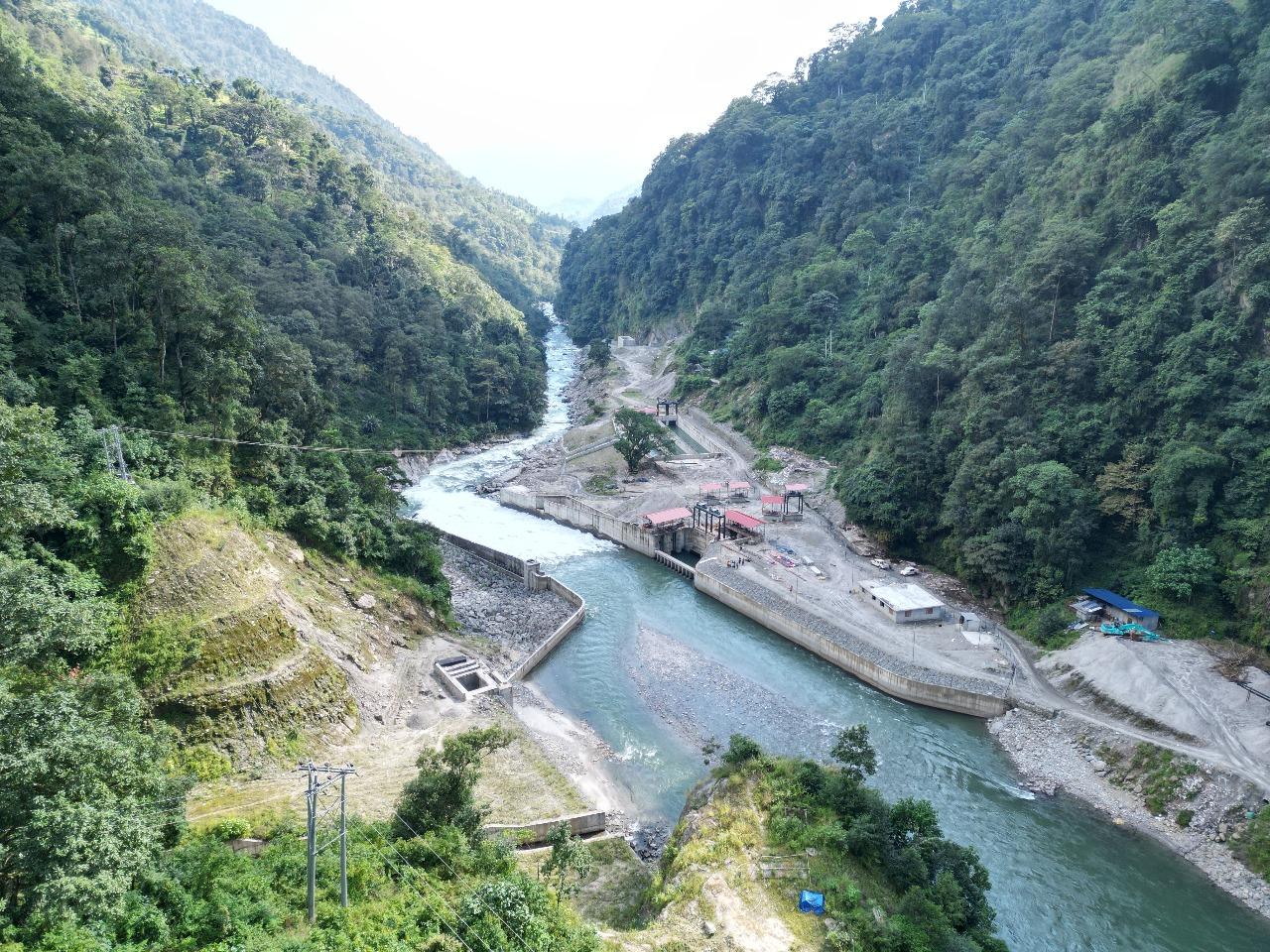
Project Overview & Description
Introduction
The Chhujung Khola Hydropower Project (CKHP) is a 63 MW run-of-river hydropower project being developed by Sangrila Urja Limited on the Chhujung Khola in Chepuwa, Sankhuwasabha District, Koshi Province, Nepal. The project represents one of the company's flagship renewable energy developments and reflects its long-term commitment to harnessing Nepal's abundant water resources for sustainable electricity generation. A construction license has been issued for the project, positioning it as an important future contributor to Nepal's national power system.
Project Overview
| Particular | Details |
|---|---|
| Project Name | Chhujung Khola Hydropower Project |
| Installed Capacity | 63 MW |
| Project Type | Run-of-River (RoR) |
| River | Chhujung Khola |
| Developer | Sangrila Urja Limited |
| Province | Koshi Province |
| District | Sankhuwasabha |
| Local Area | Chepuwa |
| Generation License | Issued |
| Power Purchaser | Nepal Electricity Authority (Expected) |
Note: Commercial operation and generation figures will be confirmed after project completion.
Project Location
The Chhujung Khola Hydropower Project is located in Chepuwa of Sankhuwasabha District, one of Nepal's most hydrologically rich Himalayan districts. The project area lies within the Arun River basin, renowned for its steep gradients, perennial snow-fed rivers, and exceptional hydropower potential.
The mountainous topography provides a significant hydraulic head, making the site highly suitable for efficient run-of-river electricity generation while minimizing the need for large-scale water storage.
Project Background
Nepal possesses an estimated hydropower potential exceeding 80,000 MW, with approximately 42,000 MW considered economically feasible. The Chhujung Khola Hydropower Project forms part of the country's strategy to increase domestic electricity production, strengthen energy security, and promote clean, renewable energy.
Recognizing this opportunity, Sangrila Urja Limited initiated the development of the project after completing detailed hydrological, geological, environmental, and engineering studies. Following regulatory approvals, the project received its generation license, marking a major milestone toward implementation.
Project Objectives
The primary objectives of the project include:
- Generate 63 MW of renewable electricity.
- Support Nepal's growing electricity demand.
- Enhance national energy security.
- Reduce dependence on imported fossil fuels.
- Promote sustainable economic development.
- Create employment opportunities.
- Encourage infrastructure development in remote Himalayan regions.
- Contribute to Nepal's clean energy transition.
Engineering Design
The Chhujung Khola Hydropower Project is designed as a run-of-river hydropower facility, utilizing the natural flow of the river without constructing a large storage reservoir.
The major engineering components typically include:
- Diversion weir
- Intake structure
- Gravel trap
- Settling basin
- Headrace tunnel
- Surge shaft
- Steel penstock
- Underground or surface powerhouse
- Turbine-generator units
- Tailrace channel
- Switchyard
- High-voltage transmission line
This configuration allows efficient energy production while maintaining downstream environmental flow requirements.
Water Resources
Chhujung Khola originates from the high Himalayan region, where glacier melt, snowmelt, and monsoon rainfall provide a dependable water source throughout much of the year.
Like most run-of-river projects in Nepal, electricity generation is expected to be higher during the monsoon season when river discharge increases, while production naturally declines during the dry winter months.
Civil Engineering Works
Construction of a hydropower project of this scale generally involves substantial civil infrastructure, including:
- River diversion structures
- Access roads
- Bridges
- Excavation works
- Concrete intake facilities
- Tunnel excavation
- Powerhouse foundations
- Worker camps
- Administrative buildings
- Environmental protection works
These facilities are designed to ensure long-term operational safety, reliability, and resilience in the challenging Himalayan environment.
Electromechanical System
The powerhouse will accommodate modern hydroelectric generating equipment designed for efficient and reliable operation.
The electromechanical system generally consists of:
- High-efficiency hydro turbines
- Synchronous generators
- Digital control systems
- Protection and automation equipment
- Step-up transformers
- GIS/Switchyard facilities
- SCADA monitoring system
Advanced automation enables continuous monitoring, efficient operation, and rapid response to changing grid conditions.
Grid Integration
Upon completion, electricity generated by the Chhujung Khola Hydropower Project will be transmitted through high-voltage transmission infrastructure and integrated into the Nepal Electricity Authority (NEA) national transmission system.
The project will strengthen electricity availability in eastern Nepal while supporting the national objective of expanding renewable power generation.
Environmental Sustainability
Environmental sustainability is an integral part of the project's planning and implementation.
Key environmental considerations include:
- Maintaining minimum environmental river flow.
- Soil erosion control.
- Slope stabilization.
- Watershed conservation.
- Biodiversity protection.
- Controlled spoil disposal.
- Reforestation programs.
- Water quality monitoring.
- Wildlife protection measures.
- Continuous environmental monitoring.
As a run-of-river development, the project is expected to have a considerably smaller environmental footprint than large reservoir-based hydropower schemes.
Community Development
The Chhujung Khola Hydropower Project is expected to contribute significantly to the socioeconomic development of surrounding communities through:
- Local employment opportunities.
- Skills development and technical training.
- Improvement of rural road networks.
- Better transportation access.
- Support for local businesses.
- Community infrastructure improvements.
- Increased economic activities.
- Opportunities for local participation and investment.
Infrastructure developed during construction often provides long-term benefits for education, healthcare access, agriculture, and tourism.
Economic Importance
The project will make a meaningful contribution to Nepal's economy by:
- Increasing domestic electricity production.
- Supporting industrial growth.
- Reducing electricity imports.
- Improving energy reliability.
- Encouraging private investment.
- Generating government revenue through taxes and royalties.
- Supporting regional economic development.
- Strengthening Nepal's renewable energy sector.
Projects such as Chhujung Khola also help position Nepal as a future exporter of clean hydroelectric energy.
Construction Challenges
Developing hydropower projects in the Himalayan region requires overcoming several engineering challenges, including:
- Rugged mountainous terrain.
- Complex geological conditions.
- Monsoon-related construction constraints.
- Remote project accessibility.
- Transportation of heavy equipment.
- Environmental compliance.
- Worker safety in high-altitude conditions.
Careful engineering, planning, and modern construction techniques are essential to successfully address these challenges.
Future Prospects
With a planned installed capacity of 63 MW, the Chhujung Khola Hydropower Project is expected to become one of Sangrila Urja Limited's most significant renewable energy assets upon completion. The project aligns with Nepal's long-term vision of expanding clean electricity generation, strengthening national energy security, and increasing power exports to regional markets.
As electricity demand continues to grow, projects of this scale will play an important role in supporting industrial development, rural electrification, and sustainable economic growth.
Conclusion
The Chhujung Khola Hydropower Project represents a major milestone in Sangrila Urja Limited's commitment to developing sustainable hydropower infrastructure in Nepal. With an installed capacity of 63 MW, the project demonstrates the company's vision of utilizing Nepal's rich Himalayan water resources to produce reliable, renewable electricity.
Once completed, the project is expected to strengthen the national power system, support regional development in Sankhuwasabha District, create employment opportunities, and contribute to Nepal's transition toward a cleaner and more sustainable energy future. Through responsible engineering, environmental stewardship, and community engagement, the Chhujung Khola Hydropower Project is poised to become a valuable addition to Nepal's growing portfolio of renewable energy developments.
