
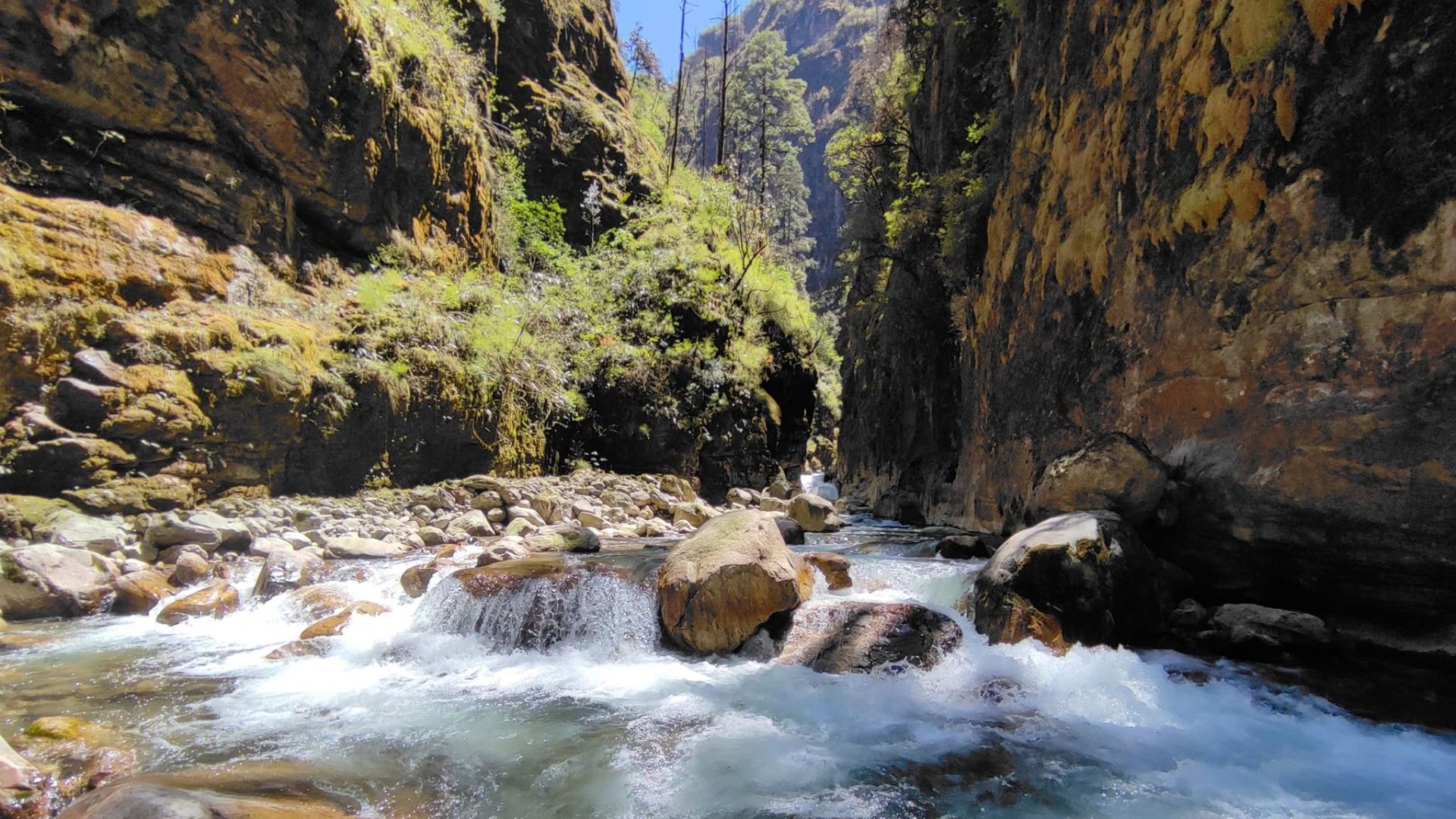
Project Overview & Description
The Chhimdi–Kawadi Khola Storage Hydropower Project is a proposed hydropower development initiative in Nepal that reflects the growing importance of reliable, sustainable, and domestically generated electricity. Located in Bajura District, the project is being developed with the objective of utilizing the region's available water resources to contribute to Nepal's long-term clean energy requirements.
Nepal has enormous hydropower potential because of its steep terrain, extensive river systems, and significant elevation differences. However, developing this potential requires projects that are technically sound, environmentally responsible, financially viable, and beneficial to the communities in which they are located. The Chhimdi–Kawadi Khola Storage Hydropower Project is envisioned within this broader context.
Project Overview
The Chhimdi–Kawadi Khola Storage Hydropower Project is designed as a storage-type hydropower project, distinguishing it from conventional run-of-river projects. A storage hydropower project can retain water and regulate its release according to electricity-generation requirements. This characteristic can provide greater flexibility in managing electricity production, particularly during periods when river flows naturally decline.
The project is associated with Kawadi Khola in Bajura, Nepal, an area characterized by mountainous terrain and significant water-resource potential. The development of hydropower infrastructure in such regions can also contribute to improved infrastructure, employment opportunities, local economic activity, and broader regional development.
The project forms part of the wider vision of developing Nepal's renewable energy resources in a responsible and sustainable manner. Through appropriate planning and implementation, it can contribute to increasing the country's domestic electricity-generation capacity while supporting the transition toward cleaner energy.
Harnessing Nepal's Water Resources
Water is one of Nepal's most valuable natural resources. Rivers originating in the Himalayas and high mountain regions flow through steep valleys before eventually reaching the plains, creating substantial opportunities for hydropower generation.
The Chhimdi–Kawadi Khola Storage Hydropower Project seeks to utilize this natural resource through appropriate hydropower infrastructure. Instead of allowing available water resources to remain underutilized, the project aims to convert the energy contained in flowing and stored water into useful electrical energy.
Hydropower generation does not require the combustion of fossil fuels. Electricity is generated by directing water through a hydraulic system, where the energy of the water drives turbines connected to generators. As a renewable energy source, hydropower can therefore play an important role in reducing dependence on conventional fossil-fuel-based energy.
Why a Storage Hydropower Project Matters
One of the important characteristics of storage hydropower is its ability to provide greater control over when water is used for electricity generation.
In a conventional run-of-river project, electricity generation is closely linked to the amount of water flowing through the river. During periods of high river discharge, generation can increase substantially, while production may decline during dry seasons.
A storage project can provide additional flexibility by retaining water and releasing it according to operational requirements. This can help address variations in river flow and electricity demand.
For Nepal, this characteristic can be particularly valuable because electricity demand and river flows do not always follow the same seasonal pattern. Storage-based hydropower can therefore complement other renewable energy sources and contribute to a more balanced electricity system.
Supporting Nepal's Clean Energy Future
Nepal's energy future is closely connected to the responsible development of its renewable energy resources. Hydropower already forms the backbone of Nepal's electricity-generation system, and additional well-planned projects can help meet growing electricity demand.
The Chhimdi–Kawadi Khola Storage Hydropower Project is envisioned as part of this clean-energy development pathway. By generating electricity from water, the project can contribute to increasing renewable electricity supply without relying directly on coal, petroleum, or other fossil fuels for generation.
A stronger domestic electricity-generation system can also support Nepal's broader economic transformation. Reliable electricity is essential for industries, businesses, tourism, transportation, communications, agriculture, households, and public services.
Location and Regional Potential
The project is located in Bajura District of Sudurpashchim Province, one of Nepal's mountainous regions. Bajura possesses considerable natural-resource potential, but like many remote mountain areas, it faces challenges related to transportation, infrastructure, employment, and access to economic opportunities.
Large-scale infrastructure projects can create opportunities for local development when they are implemented responsibly.
The development of the Chhimdi–Kawadi Khola project can potentially contribute to the local economy through construction activities, employment, transportation, procurement, services, and supporting infrastructure. Over the longer term, the presence of improved infrastructure and electricity-related development can help create additional economic opportunities in the surrounding region.
Community and Local Development
A hydropower project is not only an engineering undertaking. It is also a development activity that interacts directly with local communities.
The successful development of the Chhimdi–Kawadi Khola Storage Hydropower Project requires meaningful consideration of the people living in and around the project area. Local communities may be connected to the land, forests, rivers, agricultural areas, roads, and other natural resources that can be affected during different stages of project development.
Responsible project development therefore requires communication, consultation, appropriate mitigation measures, and respect for applicable laws and regulations.Where possible, project activities can also create opportunities for local employment and businesses. Construction work can generate demand for transportation, accommodation, food services, construction materials, skilled workers, and other local services.
Environmental Responsibility
Sustainable hydropower development requires careful consideration of the environment.
Although hydropower is a renewable source of electricity, hydropower infrastructure can have environmental and social impacts if projects are not properly planned and managed. These impacts can relate to water flow, aquatic ecosystems, forests, land use, biodiversity, construction activities, sediment, waste, and local communities.
For this reason, environmental considerations should be integrated into the project from the early planning and study stages through construction and operation.
Environmental assessments, mitigation plans, monitoring programs, appropriate construction practices, watershed considerations, and compliance with applicable environmental requirements are important components of responsible project development.
The objective is not simply to generate electricity, but to develop the project while minimizing avoidable environmental impacts and maintaining appropriate safeguards throughout its lifecycle.
Engineering and Infrastructure Development
Developing a storage hydropower project in a mountainous region requires significant engineering expertise and careful planning.
Depending on the final project design and approved technical parameters, hydropower development may involve structures and facilities such as water-retention or diversion structures, waterways, tunnels, penstocks, powerhouse facilities, electromechanical equipment, transmission infrastructure, access roads, bridges, and other supporting facilities.
Mountainous terrain can present complex geological and construction challenges. Detailed geological, hydrological, topographical, seismic, environmental, and engineering studies are therefore essential for determining the most appropriate project configuration.
Modern engineering practices and appropriate risk-management measures are particularly important for ensuring the safety, reliability, and long-term performance of hydropower infrastructure.
Contribution to Energy Security
Energy security means having access to sufficient, reliable, and affordable energy to support the needs of households, businesses, industries, and the wider economy.
Nepal's electricity demand continues to evolve as economic activities expand and electricity increasingly replaces fossil fuels in areas such as transportation, cooking, industry, and other applications.
Projects such as Chhimdi–Kawadi Khola can contribute to energy security by adding domestic renewable electricity-generation capacity.
Greater domestic generation can reduce the need to depend on imported energy and can provide additional electricity during periods of high demand, subject to the project's final capacity, operational characteristics, and integration into the national electricity system.
Supporting Economic Growth
Hydropower development has effects beyond electricity generation.
The construction and operation of a major infrastructure project can stimulate economic activity through direct employment, local procurement, transportation, construction services, engineering services, accommodation, food supply, equipment, and other supporting industries.
Electricity itself can also enable economic development. Reliable electricity can help businesses operate more efficiently, support industrial activities, improve digital connectivity, facilitate modern agricultural practices, and create opportunities for new enterprises.
For a relatively remote region such as Bajura, responsible infrastructure development can therefore have significance beyond the immediate project boundary.
Employment and Skills Development
Hydropower projects require people with a wide range of technical and non-technical skills.
During the development and construction stages, employment opportunities may arise for engineers, technicians, construction workers, drivers, surveyors, environmental professionals, administrative personnel, security personnel, equipment operators, and other workers.
Where appropriate opportunities exist, encouraging local participation can help communities benefit from the project while also supporting skills development.
Over time, exposure to major infrastructure projects can help build technical and professional experience among workers and service providers in the region.
Long-Term Vision
The Chhimdi–Kawadi Khola Storage Hydropower Project represents a long-term investment in Nepal's renewable energy infrastructure.
Hydropower projects generally require extensive preparation before construction can begin. Feasibility studies, detailed engineering, environmental assessments, financial planning, land-related processes, regulatory approvals, transmission planning, financing, procurement, construction, testing, and commissioning are all important stages of project development.
A successful project therefore depends on careful coordination among developers, technical professionals, government authorities, local communities, financial institutions, contractors, consultants, and other stakeholders.
The long-term objective is to create infrastructure that can operate safely and reliably for many years while delivering value to the energy system and the wider economy.
Sustainable Development Approach
Sangrila Urja Limited recognizes that renewable energy development should be approached with a balance between economic development, environmental responsibility, and social considerations.
For the Chhimdi–Kawadi Khola Storage Hydropower Project, this means considering not only electricity-generation potential but also the broader implications of project development.
A sustainable approach includes:
- Responsible utilization of water resources
- Environmental protection and impact mitigation
- Respect for local communities and affected stakeholders
- Safe and responsible construction practices
- Compliance with applicable laws and regulations
- Efficient use of natural and financial resources
- Appropriate occupational health and safety practices
- Long-term infrastructure reliability
- Local employment and economic opportunities where feasible
- Continuous monitoring and improvement throughout the project lifecycle
Looking Ahead
Nepal's transition toward a stronger and cleaner energy economy will require continued investment in renewable energy infrastructure. Hydropower, solar energy, and other renewable technologies can collectively contribute to meeting future electricity requirements.
The Chhimdi–Kawadi Khola Storage Hydropower Project is part of this broader opportunity. By developing Nepal's water resources responsibly, projects of this nature can help strengthen domestic electricity generation while creating opportunities for economic and regional development.
For Sangrila Urja Limited, the project represents more than the development of an electricity-generation facility. It reflects the company's broader commitment to participating in Nepal's renewable energy sector and contributing to a cleaner, more reliable, and sustainable energy future.
Chhimdi–Kawadi Khola: Powering a Sustainable Future
The Chhimdi–Kawadi Khola Storage Hydropower Project brings together Nepal's natural hydropower potential, modern engineering, renewable energy development, and a vision for long-term sustainable growth.
With responsible planning, strong technical execution, environmental stewardship, and meaningful consideration of local communities, the project has the potential to become an important part of Nepal's renewable energy infrastructure.
Sangrila Urja Limited is committed to advancing hydropower and renewable energy development in Nepal with a focus on sustainability, responsibility, and long-term value creation.
